




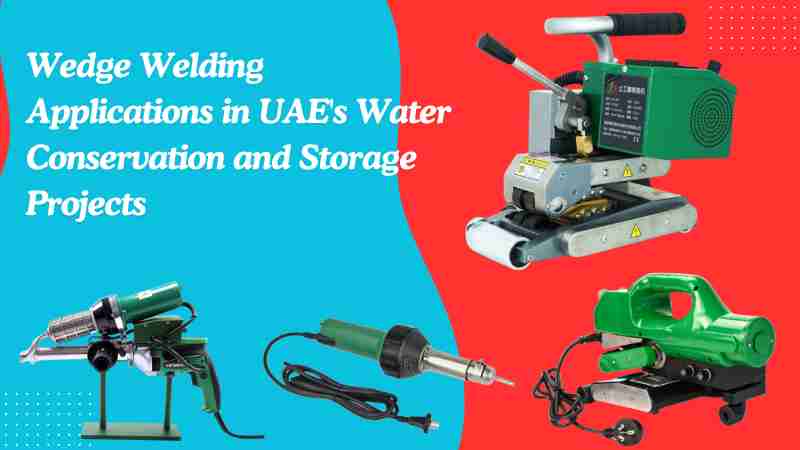
Dubai contractors navigating the thermoplastic welding equipment market face a fundamental strategic decision: should they purchase equipment outright, establishing permanent capabilities and asset ownership, or rent machinery as needed, preserving capital flexibility while accessing equipment without long-term commitment? This acquisition strategy decision carries significant implications for cash flow management, operational capabilities, business positioning, and long-term profitability—implications extending far beyond the immediate financial comparison of rental fees versus purchase prices. Both approaches offer distinct advantages and limitations that vary based on business circumstances, project characteristics, growth trajectories, and strategic objectives. This comprehensive analysis examines rental versus purchase options for wedge welding equipment in Dubai’s construction market, evaluating financial considerations, operational impacts, strategic positioning effects, and decision frameworks enabling contractors to select approaches best aligned with their specific situations and business goals.
Understanding Equipment Rental Options
Rental Market Structure in Dubai
The UAE equipment rental sector offers various options:
Specialized Welding Equipment Rental Companies: Dedicated rental firms focusing on thermoplastic welding equipment maintain comprehensive inventories including wedge welders, extrusion equipment, testing tools, and accessories. These specialists understand welding applications deeply, providing technical consultation alongside equipment rental.
General Construction Equipment Rental: Larger construction equipment rental companies may include welding machines within broader tool and equipment portfolios. While convenient for contractors seeking consolidated vendor relationships, these generalists may lack specialized welding expertise and comprehensive equipment selections.
Contractor-to-Contractor Rental: Informal rental arrangements between contractors occur regularly, with equipment owners renting surplus capacity to colleagues during idle periods. These arrangements offer flexibility and competitive pricing but lack formal support structures and may present availability challenges.
Manufacturer or Distributor Rental Programs: Some equipment distributors including established suppliers like a professional wedge welding supplier UAE offer rental programs enabling customers to evaluate equipment before purchase or address temporary capacity needs without permanent acquisition commitments.
Typical Rental Terms and Pricing
Rental agreements follow common structures:
Daily Rental Rates: Short-term rentals typically cost 1-2% of equipment value per day. For AED 80,000 wedge welding machine, daily rental might be AED 800-1,600 depending on equipment sophistication, rental company, and negotiation.
Weekly and Monthly Rates: Longer rental periods receive discounted rates compared to daily rental. Weekly rates approximate 3-5 times daily rates (rather than 7x), while monthly rates equal 10-15 times daily rates (versus 30x). Monthly rental of AED 80,000 machine might cost AED 2,400-3,200 (3-4% of equipment value).
Minimum Rental Periods: Rental companies typically impose minimum rental periods (often 1 day or 1 week) regardless of actual usage duration. Weekend rentals may be charged at reduced rates or included free with week-long rentals spanning weekends.
Deposit Requirements: Rental agreements usually require security deposits (often AED 3,000-10,000) protecting rental companies against equipment damage or loss. Deposits are refunded upon satisfactory equipment return, though administrative delays may occur.
Insurance and Damage Responsibility: Renters typically bear responsibility for equipment damage or loss during rental period, either through direct liability or rental company insurance programs adding 10-15% to rental costs. Contractors should verify existing insurance policies cover rented equipment or obtain appropriate coverage.
Financial Analysis: Rental vs. Purchase
Break-Even Calculations
Comparing rental and purchase economics reveals break-even points:
Purchase Scenario: AED 80,000 equipment with AED 15,000 accessories and training equals AED 95,000 total initial investment. Annual operating costs (maintenance, parts, insurance, storage) approximate AED 8,000.
Rental Scenario: Same equipment rented at AED 2,800 monthly (3.5% of value) costs AED 33,600 for 12 months of availability, with no maintenance or storage costs but potential insurance additions of AED 400/month (AED 4,800 annually).
Break-Even Analysis: Equipment purchase costs AED 95,000 initial plus AED 8,000 annual operating equals AED 103,000 first year. Rental for 12 months costs AED 38,400 (rental plus insurance). Break-even occurs when cumulative rental costs equal purchase costs: AED 95,000 / AED 38,400 per year = 2.47 years. Beyond 2.5 years of continuous rental, purchase proves more economical.
Utilization Adjustments: If equipment is only needed 6 months annually, rental costs AED 19,200 per year, extending break-even to 4.95 years. Lower utilization favors rental, while high utilization favors purchase.
Cash Flow Implications
Different approaches create distinct cash flow patterns:
Purchase Impact: Equipment purchase requires substantial upfront cash outlay (AED 95,000 in example above) potentially straining working capital. This payment occurs before equipment generates revenue, creating timing mismatch between expenditure and returns. Equipment financing spreads costs but adds interest expense (typically 8-12% annually in UAE), increasing total cost by 10-25% depending on terms.
Rental Impact: Rental avoids large upfront expenditure, preserving working capital for operations, materials procurement, and other business needs. Rental expenses align with equipment use—paid when equipment generates revenue—creating better cash flow matching. However, rental creates ongoing obligation without building equity or asset value.
Working Capital Considerations: Contractors with strong cash positions can comfortably purchase equipment, while businesses with tight working capital or seasonal cash flow variations may find rental’s pay-as-you-go structure more manageable despite higher long-term costs.
Depreciation and Tax Implications
Tax treatment differs between ownership and rental:
Equipment Ownership: Purchased equipment appears on balance sheet as capital asset subject to depreciation over useful life (typically 5-10 years for welding equipment). This depreciation creates tax deductions reducing taxable income. Under UAE’s federal corporate tax (9% on profits exceeding AED 375,000), depreciation tax benefits partially offset ownership costs, though benefits depend on company profitability and specific tax situation.
Rental Expense: Equipment rental constitutes operating expense fully deductible in year incurred, potentially providing faster tax benefit recognition than gradual depreciation. However, total deductions over time theoretically equal equipment cost under both approaches—timing rather than magnitude differs.
Free Zone Considerations: Companies operating in Dubai free zones with tax exemptions may not benefit from depreciation or expense deductions, neutralizing this consideration in rental versus purchase analysis.
Operational Considerations
Equipment Availability and Flexibility
Access reliability affects operations:
Purchase Advantages: Equipment ownership ensures availability whenever needed without dependence on rental market availability. During peak construction seasons when rental demand tightens, equipment owners maintain operational continuity while renters may face shortages. This reliability proves particularly valuable for contractors with predictable, consistent welding needs.
Rental Flexibility: Rental enables accessing different equipment types or capacities as project requirements vary. Contractors can rent manual machines for small projects, upgrading to automated equipment for large installations without committing to ownership of multiple machine types. This flexibility proves valuable for businesses with diverse, unpredictable project portfolios.
Technology Access: Rental provides opportunities to use latest equipment technology without obsolescence risk. As manufacturers introduce improved models, renters can access new capabilities immediately, while equipment owners face decisions about whether to upgrade purchased machines or continue using older technology.
Maintenance and Downtime
Equipment maintenance affects operational reliability:
Ownership Responsibility: Equipment owners bear full maintenance responsibility including preventive service, repairs, spare parts inventory, and addressing unexpected failures. Well-maintained equipment delivers reliable performance, but maintenance requires technical capability, time investment, and ongoing costs. Equipment failures create business disruption until repairs are completed.
Rental Convenience: Rental companies maintain equipment between rental periods, with routine maintenance included in rental costs. If rented equipment fails, rental companies typically provide replacement units minimizing business disruption. This maintenance-free convenience particularly benefits contractors lacking internal technical capabilities or preferring to focus resources on core business activities.
Quality Variability: While reputable rental companies maintain equipment properly, rental fleet condition varies. Heavily-used rental equipment may show more wear than well-maintained purchased equipment, potentially affecting performance. Inspection before accepting rental equipment helps ensure adequate condition.
Training and Competency Development
Equipment familiarity affects productivity:
Ownership Consistency: Contractors using owned equipment develop deep familiarity with specific machines, understanding their characteristics, optimal operating parameters, and quirks. This familiarity enables maximum productivity while building organizational knowledge that persists as experienced operators train newcomers.
Rental Variability: Different rental equipment models—even from same manufacturer—may have slightly different controls, capabilities, or operating characteristics. Operators must adapt to equipment variations potentially reducing productivity during familiarization periods. Frequent equipment changes may prevent developing deep competency with any specific machine.
Strategic Business Considerations
Market Positioning and Client Perception
Equipment ownership influences business image:
Professional Image: Equipment ownership demonstrates business commitment, financial stability, and professional capability—factors influencing client confidence when awarding contracts. Major projects increasingly require contractors demonstrate equipment ownership or guaranteed access during prequalification, potentially excluding contractors dependent on casual rental.
Competitive Advantage: Equipment ownership enables confident bidding on projects with aggressive schedules or simultaneous project commitments that rental availability uncertainty might not support. This capability expands accessible project universe creating competitive advantages over rental-dependent competitors.
Client Requirements: Sophisticated clients including government entities, major developers, and international contractors may specify equipment ownership or guaranteed availability as qualification criteria. Rental-dependent contractors face disadvantages or disqualification on these premium projects.
Business Growth and Scalability
Equipment strategy affects growth capacity:
Purchase as Growth Constraint: Equipment purchases consume capital potentially limiting business’s ability to pursue multiple simultaneous opportunities. Contractors might face choices between equipment investment and bidding additional projects—constraints that could slow growth during expansion phases.
Rental as Growth Enabler: Rental’s capital-light approach preserves resources for pursuing opportunities, potentially enabling faster growth during expansion phases. Contractors can scale capacity up or down rapidly matching evolving business volume without capital constraints or disposal challenges when downsizing.
Transition Strategies: Many contractors begin with rental while establishing capabilities and customer base, transitioning to equipment purchase once sustained project volume justifies investment. This staged approach balances flexibility during early growth with ownership economics at scale.
Risk Management
Different approaches create distinct risk exposures:
Purchase Risks: Equipment ownership creates risks including obsolescence (technology advances making equipment less competitive), underutilization (purchased capacity exceeding actual needs), damage or loss (equipment theft or project-related damage), and disposal challenges (difficulty selling equipment when upgrading or exiting business). These risks can be managed but not eliminated.
Rental Risks: Primary rental risks include availability during peak demand periods (rental market tightens when many contractors need equipment simultaneously), rate volatility (rental rates may increase beyond budgeted amounts), and dependency on rental company continuation (rental company business failure or market exit creates supply disruption).
Complementary Equipment Considerations
Complete welding capabilities require multiple technologies:
Extrusion Welding Equipment: While this analysis focuses on primary wedge welding machines, comprehensive installations also require extrusion welding equipment for detail work. Similar rental versus purchase logic applies—contractors might own wedge welders while renting specialized hot air extrusion machine UAE equipment used less frequently, or vice versa depending on project mix.
Testing Equipment: Quality assurance tools including air pressure testing systems and vacuum boxes represent additional investment. Lower-cost testing equipment often justifies purchase even for contractors renting primary welding machines, while expensive field tensiometers might be rented for occasional specialized testing.
Mixed Strategies: Sophisticated contractors may own frequently-used equipment while renting specialty or backup machines as needed, creating hybrid approaches optimizing across equipment portfolio rather than applying uniform buy-or-rent decisions to all equipment types.
Decision Framework
Evaluation Criteria
Systematic assessment supports optimal choices:
Utilization Projection: Calculate expected annual equipment usage in operating hours or project volume. High utilization (>50% of available time or >3,000 annual operating hours) strongly favors purchase, while low utilization (<20% or <1,000 hours) favors rental. Moderate utilization requires deeper analysis considering factors beyond pure financial economics.
Financial Position: Assess available capital, working capital needs, and cash flow patterns. Strong financial position enables purchase leveraging ownership economics, while constrained capital or seasonal cash flow challenges favor rental’s capital preservation and expense alignment.
Business Maturity: Established contractors with stable project pipelines benefit from ownership, while startups or businesses entering new markets may prefer rental during capability development phases, transitioning to ownership once market position solidifies.
Technical Capabilities: Organizations with internal maintenance expertise and technical knowledge can successfully manage equipment ownership, while contractors lacking these capabilities may find rental’s maintenance-free convenience worth premium pricing.
Strategic Direction: Consider growth plans, target markets, and competitive positioning. Businesses pursuing rapid growth or premium market segments benefit from ownership’s professional image and guaranteed capacity, while contractors targeting niche opportunities or maintaining flexibility favor rental approaches.
Quantitative Scoring Model
Structure systematic evaluation using weighted criteria:
- Calculate Break-Even Timeline: Determine years until cumulative rental costs equal purchase investment based on realistic utilization projections
- Assess Financial Capacity: Score ability to fund purchase without business disruption (1-5 scale)
- Evaluate Utilization Certainty: Rate confidence in utilization projections (1-5)
- Rate Technical Capabilities: Assess internal maintenance and technical expertise (1-5)
- Consider Strategic Importance: Evaluate equipment’s role in competitive positioning and growth plans (1-5)
- Weight Factors: Assign importance weights reflecting business priorities (must total 100%)
- Calculate Scores: Multiply factor ratings by weights, summing to overall purchase-favorability score
Interpretation: Scores above 3.5 suggest purchase, below 2.5 favor rental, while 2.5-3.5 indicate either approach could work depending on specific circumstances and preferences.
Hybrid and Alternative Approaches
Lease-to-Own Programs
Some suppliers offer lease-purchase arrangements:
Structure: Monthly payments over 24-48 month terms with ownership transferring at conclusion. Early-term payments include interest charges (effectively 8-12% annually) while building equity in equipment.
Advantages: Spreads equipment costs while building toward ownership. Lower initial cash outlay than purchase with eventual ownership benefits unavailable through rental.
Disadvantages: Total cost exceeds outright purchase by 10-25% due to financing costs. Early termination may involve penalties or remaining payment obligations.
Suitability: Appropriate for contractors wanting ownership benefits but lacking full purchase capital or preferring cash flow spreading. Particularly attractive when tax benefits offset financing costs.
Rent-to-Own Arrangements
Some rental companies credit rental payments toward purchase:
Structure: Standard rental terms with portion of rental fees (often 50-75%) applicable as purchase credit if customer buys equipment within specified period (typically 6-12 months).
Advantages: Enables equipment evaluation before purchase commitment while building equity. Reduces purchase price if rental period reveals strong utilization justifying ownership.
Disadvantages: Rental-to-own rates typically exceed standard rental (often 20-30% premium) partially offsetting purchase credits. Limited applicability period means credits expire if not exercised timely.
Equipment Sharing Cooperatives
Emerging collaborative models enable shared ownership:
Concept: Multiple contractors jointly purchase equipment, sharing both costs and usage rights according to agreed schedules and terms.
Advantages: Reduces individual capital commitment while providing ownership benefits. Members access better equipment than individually affordable while sharing maintenance responsibilities and costs.
Challenges: Requires strong member relationships, clear usage agreements, and fair conflict resolution processes. Scheduling conflicts and unequal utilization can create tensions. Works best among non-competing contractors or within professional associations.
Conclusion
The rental versus purchase decision for wedge welding equipment in Dubai ultimately depends on contractor-specific factors including utilization levels, financial position, business maturity, technical capabilities, and strategic objectives. Neither approach universally superior—optimal choices vary based on circumstances.
High-utilization contractors with strong financial positions and established market presence typically benefit from equipment purchase, enjoying lower long-term costs, guaranteed availability, professional image enhancement, and competitive advantages justifying capital commitment. Conversely, contractors with uncertain utilization, constrained capital, or preference for flexibility often find rental’s capital preservation, maintenance-free convenience, and scalability worth premium pricing despite higher long-term costs.
By systematically evaluating financial economics, operational impacts, strategic considerations, and business-specific circumstances using frameworks outlined in this guide, Dubai contractors can make informed equipment acquisition decisions supporting operational excellence and business success in the UAE’s dynamic construction market.